
Integration Modernization is no longer a choice—it’s a necessity. Companies relying on legacy enterprise service buses (ESBs) are facing growing challenges that hinder innovation and scalability.
Legacy ESB are no longer mere inconveniences; they are critical impediments to growth, innovation, and competitive survival. This article delves into the compelling reasons why modernizing your integration infrastructure is not just an option, but a non-negotiable imperative for businesses aiming to thrive in the coming years.
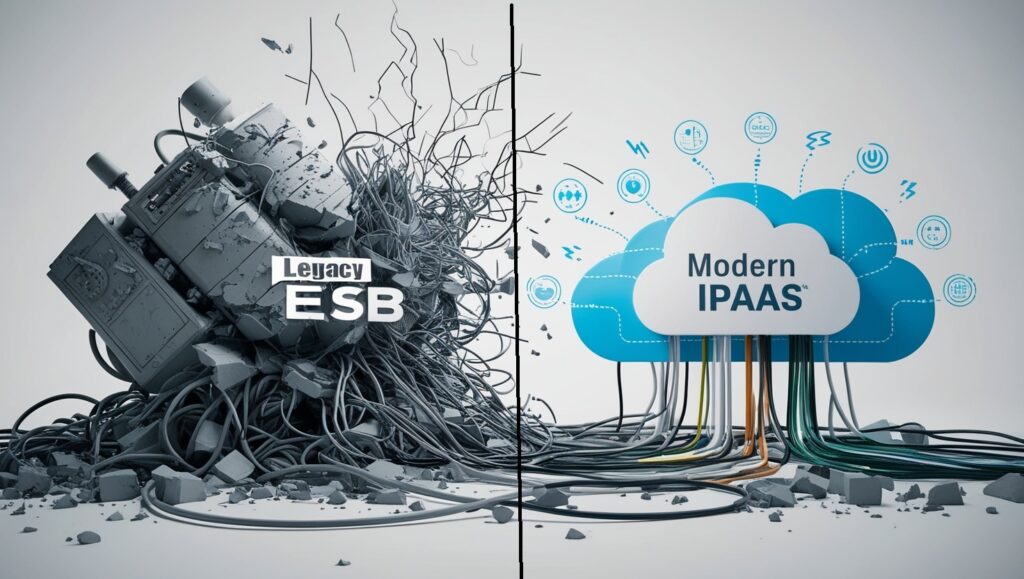
The Problem: Why Legacy ESBs Are Holding Businesses Back ?
The landscape of enterprise technology has shifted dramatically since the inception of traditional ESBs. What were once cutting-edge solutions are now struggling to keep pace with the demands of cloud-native applications, the explosion of data, and the imperative to integrate Artificial Intelligence (AI) into core business processes. The symptoms of this struggle are becoming increasingly painful:
*High TCO – Proprietary licensing ,increasing cost of maintaining aging infrastructure and specialized skillsets
*Vendor Lock-in – Limited customization options restrict businesses from adopting emerging technologies.
*Lack of Agility – Complex architectures & Monolithic nature make it difficult to integrate with cloud-native applications or AI-driven workflows.
*Slow Development Cycles – New projects get stuck in long release pipelines, Integration bottlenecks become commonplace.
*Bottlenecks for Digital Transformation – As demand for real-time data, API-first strategies, and microservices grows, legacy ESBs struggle to keep up.
*The Cloud-Native and AI Integration – Legacy ESBs were not architected for the cloud & AI era.
*Lack of Agility – Monolithic in nature, making them cumbersome and slow to adapt to changing business needs and watching cloud-native disruptors outperform them in agility.
The “Why Now?”: Rapidly Evolving AI World
Earlier Modernization was looked as Cost Saving & Technology upgrade , in the AI world now its for Survival. it’s a business risk.
Delaying this crucial upgrade directly impacts your organization’s ability to:
*Maintain Competitiveness: In a market driven by agility and innovation, companies burdened by outdated integration technologies will inevitably fall behind their more nimble competitors.
*Accelerate Innovation: Modern technologies like AI, Machine Learning (ML), and real-time analytics offer unprecedented opportunities for innovation. However, these technologies thrive on seamless data access and integration.
*Leverage Current Tech Trends: The technology landscape is in constant flux. Delaying modernization means missing out on the benefits of cloud computing, microservices architecture, API-led connectivity, and the power of AI.

Beyond “Rip-and-Replace”: Smart Migration Strategies : Its Journey !!!
The fear of “big bang” migrations keeps many companies locked into outdated systems. However, modernization doesn’t have to mean disruption—strategic migration approaches make the transition seamless.
*Phased Approach – Incrementally migrating integrations to a modern platform, starting with less critical systems and gradually moving towards core applications. This allows for learning and adjustments along the way, minimizing risk.
*Co-existence Strategy – Smooth switch off and switch on , Keeps critical ESB functions running while integrating a modern integration platform alongside. De-Risk as it provides a safety net and allows for thorough testing of the new platform
*Re-platforming – Transition to No-Code, Open Source integration solutions for flexible, scalable integration.
These strategies ensure minimal risk, predictable transition timelines, and business continuity.
The Modern Alternative: Embracing the Modern No-Code, AI-Driven Integration Platform:
The ideal destination for ESB modernization is a modern integration platform, such as an integration Platform as a Service (iPaaS) with AI and Managed Cloud Provisioning (MCP) capabilities built on a strong integration and API foundation, ideally with a No-code or Low-code interface and an Open Source core. Platforms are designed for
*Agility & Speed – Drag-and-drop integrations allow rapid deployment, cutting development time.
*API-First Connectivity – Seamless integration with AI workflows, SaaS applications, and microservices.
*AI-Driven Automation – Leveraging AI for intelligent data mapping, anomaly detection, and automated integration workflows enhances efficiency and reduces errors.
*Integrate AI with business – AI Interoperability , Private AI , MCP Server and Clint for Integration orchestration.
*Cloud-Native Architecture – Designed as lightweight microservices computing and distributed environments.
*Low-Code/No-Code Capabilities: Empowering citizen integrators with intuitive visual interfaces significantly accelerates integration development and reduces reliance on specialized coding skills.
Enterprises moving from ESBs to modern iPaaS solutions are reducing integration overhead while accelerating innovation.
Value Delivered: The Tangible Benefits of Switch:
Migrating from a legacy ESB to a modern integration platform unlocks a wealth of benefits that directly impact the bottom line and drive business growth:
*Lower Total Cost of Ownership (TCO) – No expensive licensing fees, pay-as-you-go scalability.
*Simplified Management: Centralized management and monitoring of API’s, AI’s , MCP’s , integrations provide greater visibility and control, reducing complexity and improving operational efficiency.
*Increased Agility: Rapidly develop and deploy new integrations, adapt quickly to changing business requirements, and accelerate digital transformation initiatives.
*Faster Time-to-Market – Deploy new applications 3x faster than legacy ESBs allow.
*Improved Scalability – Dynamically adjust workloads without infrastructure limitations.
*Enhanced Security – Open Source architecture allows transparent, customizable security controls.
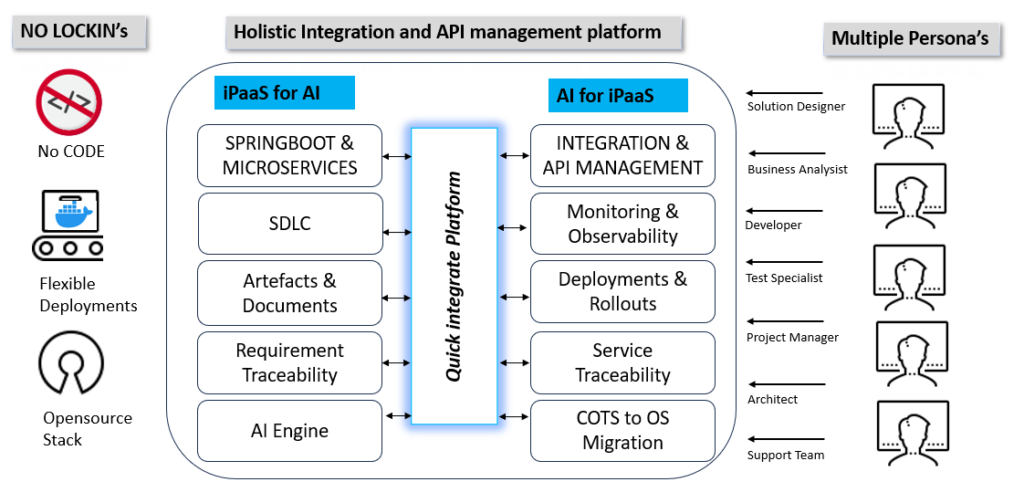
The Open Source Advantage: Freedom and Flexibility
Vendor lock-in has been one of the biggest pain points of legacy ESBs. Moving to an Open Source based iPaaS eliminates this constraint and brings in productization of Opensource Technology stack.
Why Open Source is the Future
*Customizability – Modify and extend functionality as business needs evolve.
*No Licensing Costs – No restrictive fees or proprietary contracts.
*Security & Transparency – Community-driven security patches ensure adaptability to emerging threats.
*Freedom to Innovate – Choose best-of-breed tools without being locked into a single provider.
*Future-Proofing Your Investment: Open Source solutions are often more adaptable to emerging technologies and evolving industry standards
Companies modernizing with an Open Source iPaaS gain full control over their tech stack—ensuring long-term flexibility and cost-effectiveness.
Conclusion: Integration Modernization ,The Time for Action is Now
In todays dynamic landscape , clinging to the limitations of a legacy ESB is no longer a viable strategy. The high costs, lack of agility, and inability to seamlessly integrate with modern technologies like cloud-native applications and AI are significant impediments to growth and competitiveness. By embracing a modern integration platform, particularly one with the flexibility and innovation of an Open Source foundation, organizations can break free from these constraints, unlock new levels of agility, and accelerate their journey towards digital transformation.