Understanding B2B Business Model
Startups or enterprises whose core business involves integrating customers and providers which start from Capturing Customer data adding value to it , processing it and delivering the best options back to customers . The following is a typical functional flow for this industry
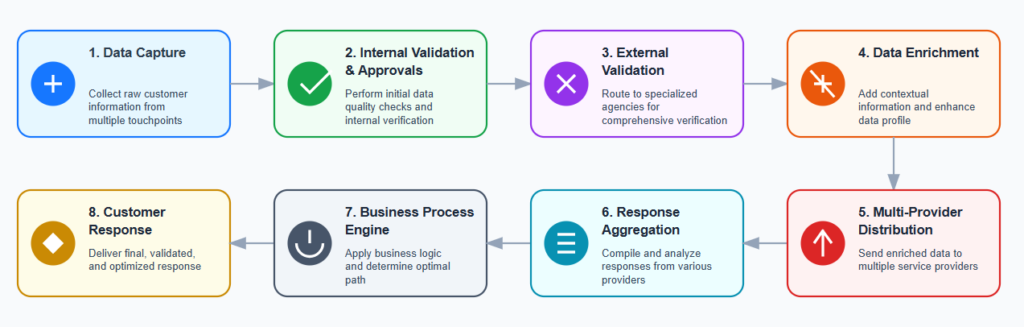
Its an sophisticated ecosystem of continuous data flow, validation, enrichment, and optimization that transforms how businesses interact and deliver value. lets talk on industries where its prominent.
### 1. FinTech Lending Platform
**Scenario**: Loan Origination Process
-> Customer applies for a loan -> Data collected: Personal info, income, credit history -> Validation steps -> Multiple lenders evaluate the application-> Best loan offer selected and presented to customer
### 2. Insurance Policy Issuance
**Scenario**: Health Insurance Application
– Customer submits health insurance application- Data collection: Medical history, personal details- Validation process- Optimal insurance plan recommended
### 3. Real Estate Mortgage Processing
**Scenario**: Mortgage Application
– Customer seeks mortgage approval – Data points: Income, property details, credit history – Validation steps- Best mortgage terms presented
### 4.Healthcare Provider Network
**Scenario**: Patient Referral and Treatment Authorization
### 5.Supply Chain and Logistics
**Scenario**: Multi-Vendor Shipment Tracking
### 6.Educational Technology Platforms
**Scenario**: Student Credential Verification
### 7.Agricultural Technology Ecosystem
**Scenario**: Crop Insurance and Market Pricing
### 8.Energy and Utility Management
**Scenario**: Smart Grid and Renewable Energy Trading
### 9.Government and Public Services
**Scenario**: Citizen Service Integration
### 10.Travel and Hospitality Ecosystem
**Scenario**: Multi-Provider Travel Booking
Present Day : This business model has repetitive day to day challenges as it has external dependency (integrating customers and providers)and external changes are not in your control :).Business stakeholders focus shifts on solving these or living by constraints & technology restriction rather then focsuong on growth & new ways of revenue.

Initially, businesses may face minimal challenges due to limited volume, partners, and customer acquisition options. However, as they grow, complexities arise. Legacy systems, diverse technologies, undocumented APIs, non-standard code, unstructured services, and multiple applications can hinder operations, leading to a lack of visibility and control. This technology stack quickly becomes technical debt.
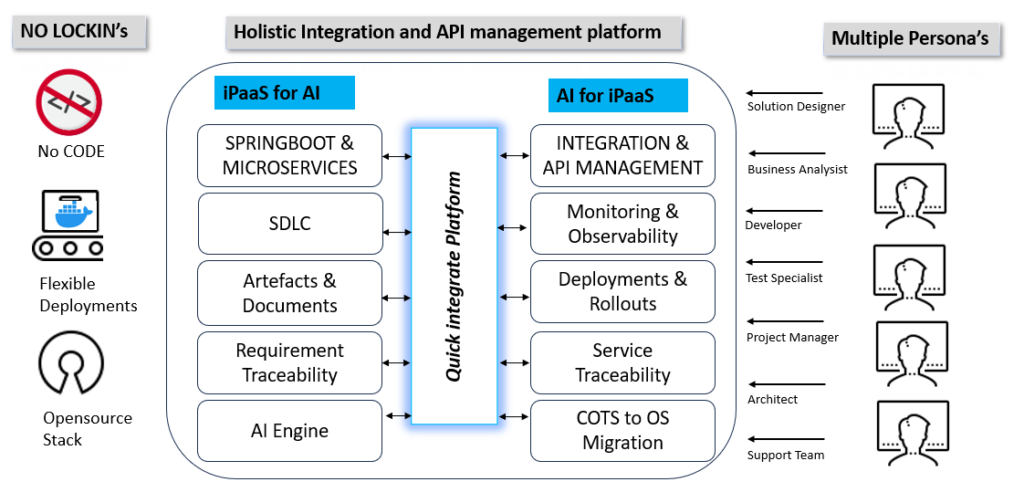
To future-proof businesses in a rapidly changing environment with new customer interaction methods, constant changes from providers/partners, new compliance requirements, and the need for new technology adoption, faster adaptation is crucial. Organizations require a flexible integration and API layer. This layer enables quick changes, plug-and-play capabilities, and provides clear visibility and monitoring. Businesses can easily integrate new technologies, such as AI for customer interaction and validations, without significant disruptions.
It’s essential to view this integration/API layer not just as a technological solution, but as a strategic approach to simplify processes, accelerate change, and enhance overall business agility.